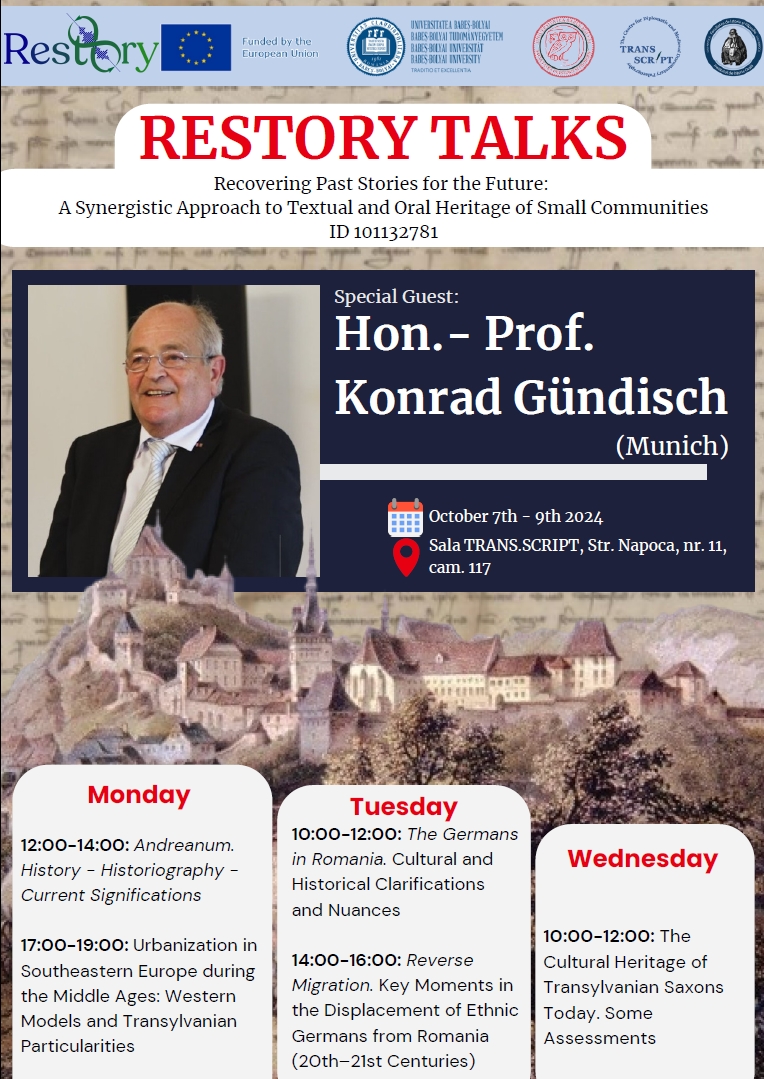
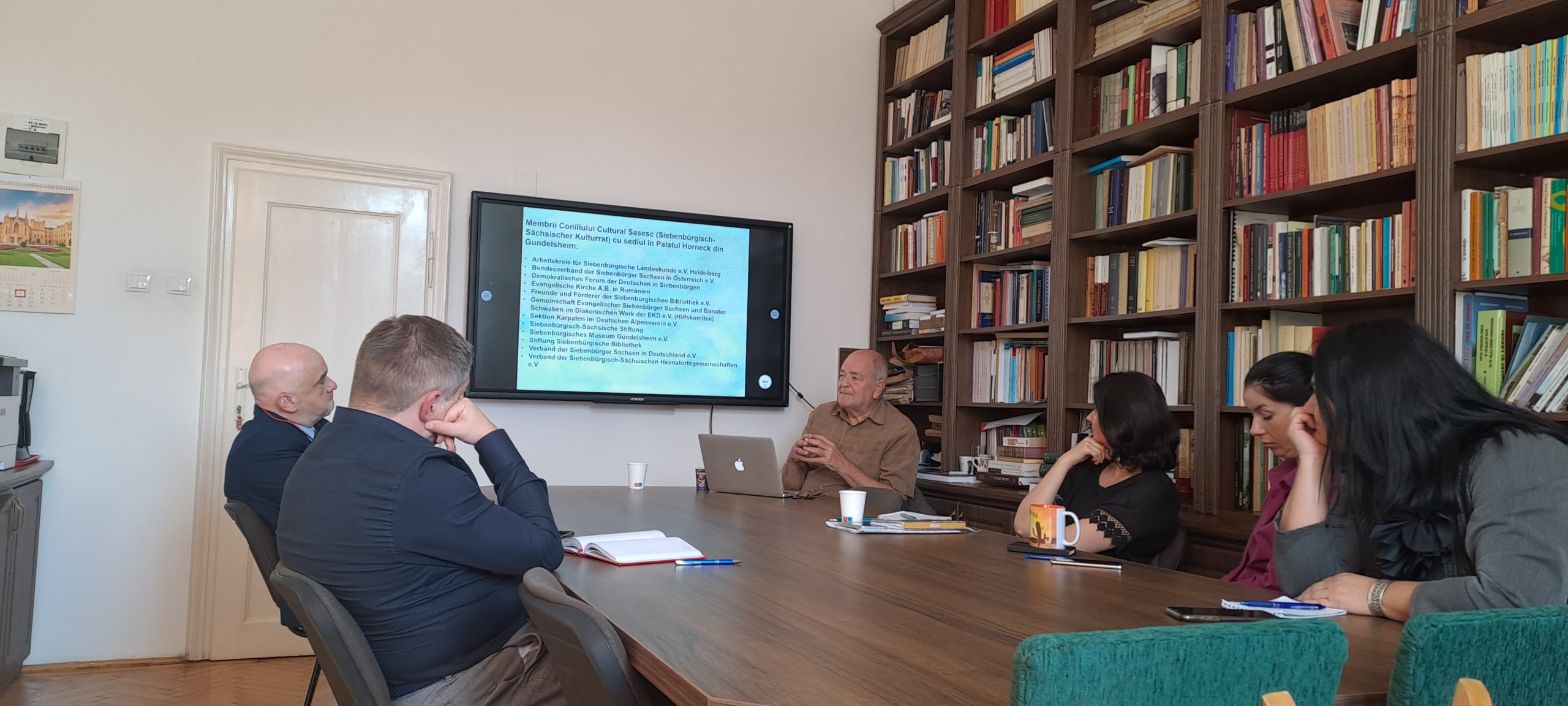
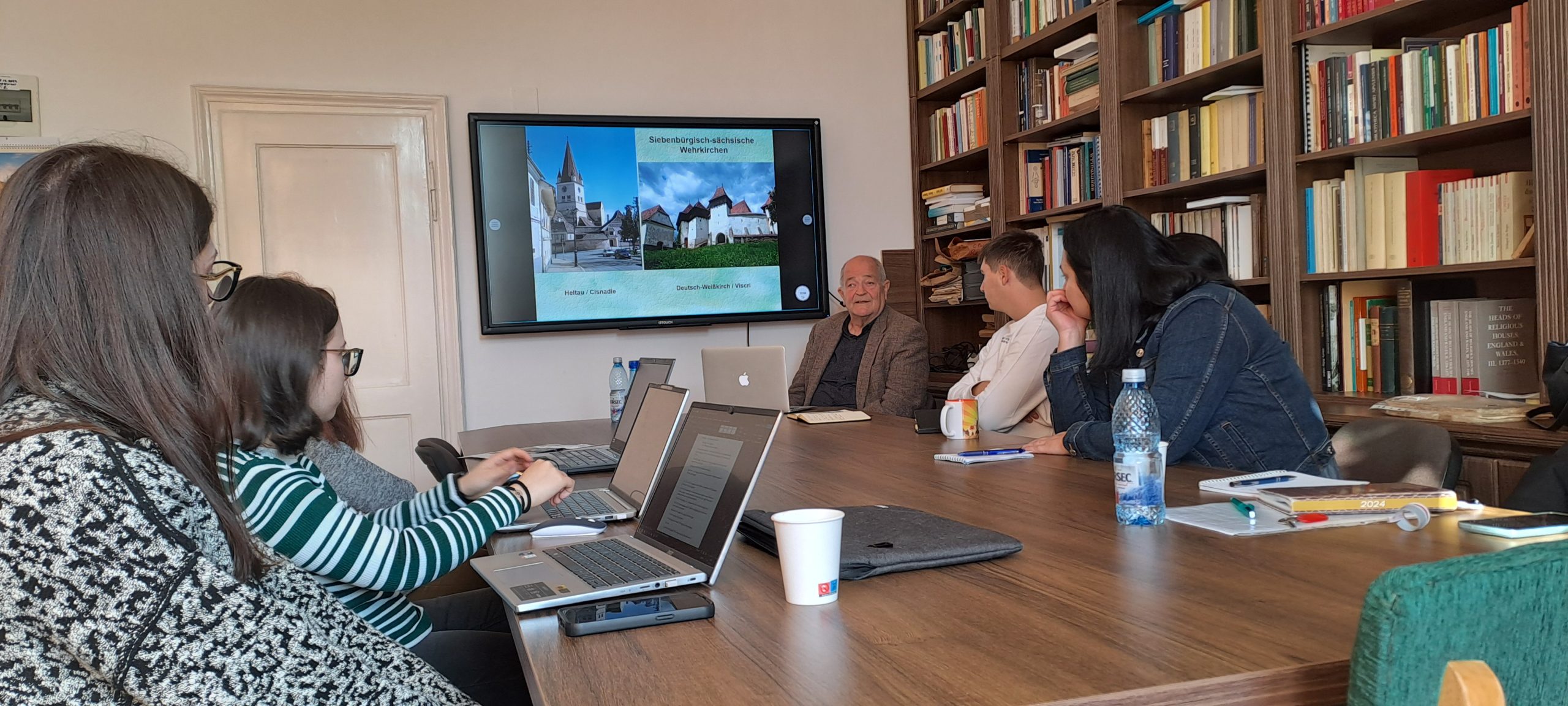
Between 7th and 9th October 2024, as part of the project RESTORY – Recovering Past Stories for the Future: A Synergistic Approach to Textual and Oral Heritage of Small Communities, the esteemed historian Hon.-Prof. Konrad Gündisch from Munich delivered a series of five lectures. These lectures addressed various aspects of Saxon identity and the historical development of their communities in Transylvania, spanning from their establishment in the 12th to 14th centuries to their emigration to German-speaking countries in the 20th century.
On October 7th , two lectures were presented. The first examined the significance of the Andreanum diploma (1224) for the Saxon community, highlighting the privileges granted to them by the Hungarian kings, including the formation of the Universitas Saxonum (1486) and the community’s distinct legal and organizational autonomy. The second lecture analyzed models of urbanization in southeastern Europe, focusing on the structure of Saxon medieval towns in Transylvania. Key themes included the conditions for urban establishment, fortification, economic development, and the implementation of specific legislation, drawing upon several case studies to illustrate these points.
The lectures on October 8th centered on the theme of Germans in Romania and their migration patterns. Professor Gündisch explored the historical trajectories of various German ethnic subgroups, Saxons, Swabians, and Germans from Transylvania, Banat, Satu Mare, Bukovina, Bessarabia, and Dobrudja. His analysis covered their chronological development up to their dislocation from Romania, examining the factors that triggered these migrations and their broader consequences.
The final lecture, held on October 9th, focused on the social organization and activities of the German minority in Romania during the 20th century, a cluster formed by the previously examined ethnic subgroups, in order to gain more vocal and representative political standpoint.
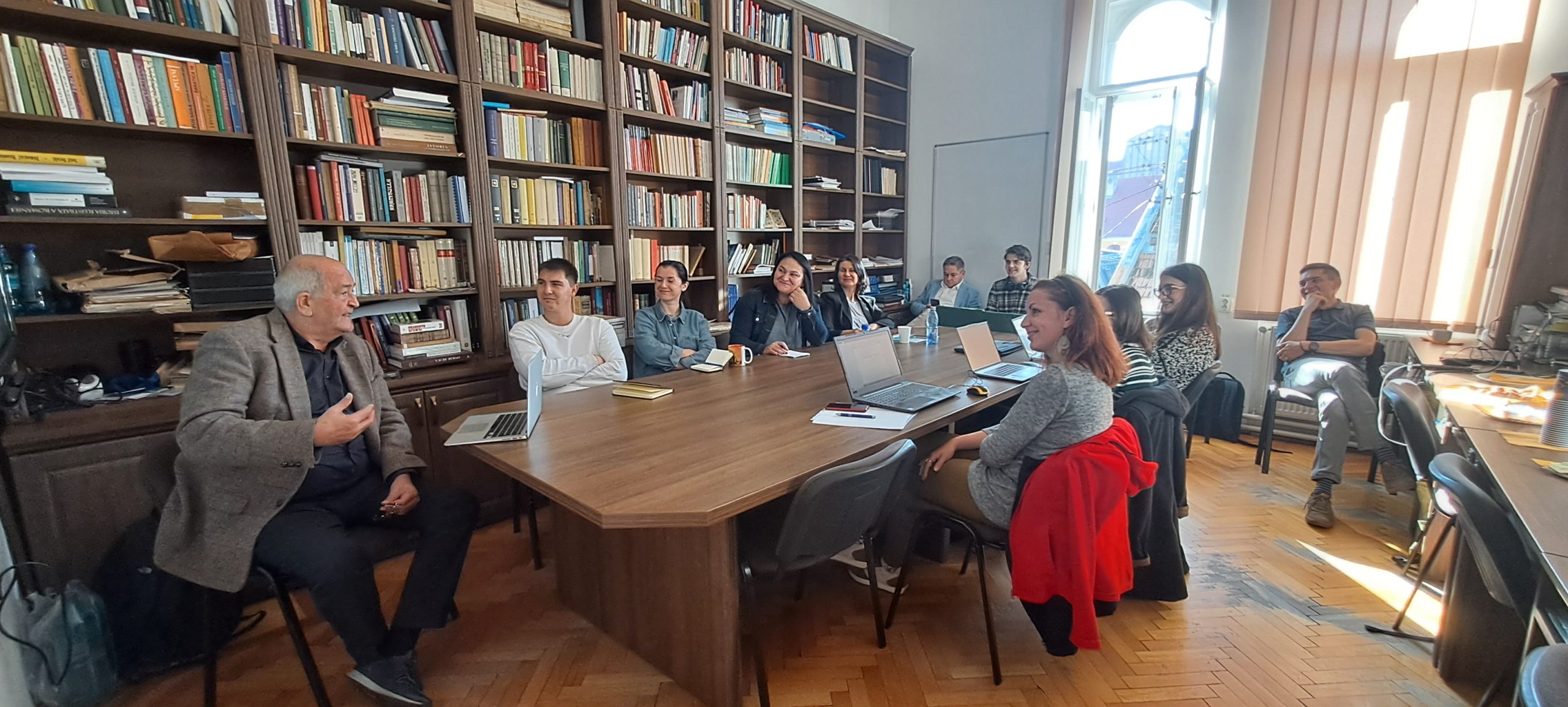
Each lecture was followed by a question-and-answer session, which fostered extensive discussions on the history of the German minorities in Romania, particularly of the Saxons in Transylvania. These debates encompassed from the medieval to contemporary periods, offering participants the opportunity to deepen their understanding of the historical and cultural dynamics of a certain ethic community in nowadays Romania. The discussions also emphasized the continued importance of such topics in contemporary research.